
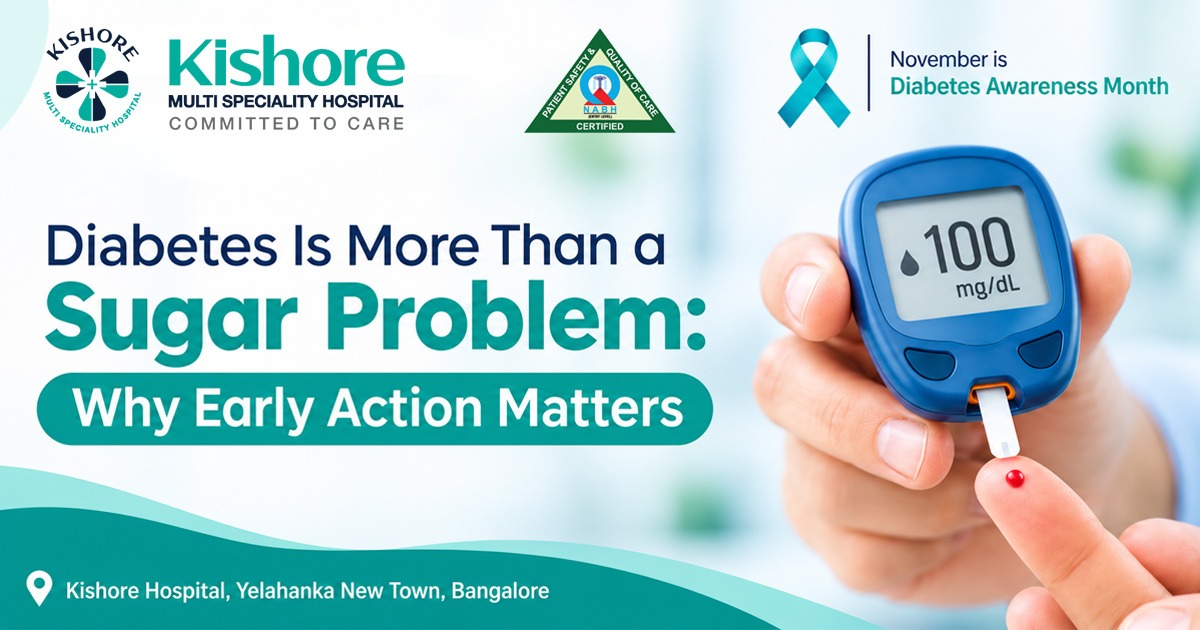
November is Diabetes Awareness Month, and World Diabetes Day falls on 14 November.
Many people think diabetes only means high blood sugar. In reality, it is a whole-body condition. Over time, high blood glucose can damage the heart, kidneys, eyes, nerves and blood vessels. The most worrying part is that this damage often happens silently, long before you feel unwell.
This year, the International Diabetes Federation has chosen “Early Action on Diabetes” as the theme for a new two-year World Diabetes Day campaign. It is a message every family in Bangalore should hear.
What uncontrolled diabetes can do
Heart and blood vessels. High blood glucose raises the risk of heart disease and stroke. In people with diabetes, this blood vessel damage can also begin at a younger age.
Kidneys. The kidneys can slowly lose their ability to filter waste. Early diabetic kidney disease is often silent, which is why routine urine and kidney function tests matter.
Eyes. Damage to the tiny blood vessels in the eyes can lead to vision loss. People with type 2 diabetes should have an eye exam when they are diagnosed.
Nerves and feet. Nerve damage can dull sensation in the feet, so an injury may go unnoticed until it becomes serious. This is why daily foot checks are so important.
Liver. Diabetes is also linked with liver problems, and liver function tests are part of routine monitoring in type 2 diabetes. Doctors check liver health along with kidney function, cholesterol and blood pressure.
Don’t wait for symptoms
Type 2 diabetes can be present for years before it is diagnosed. Because of this, complications may already be advanced by the time it is found. Watch for these warning signs, but remember that many people have none:
- Increased thirst and frequent urination
- Unusual tiredness
- Blurred vision
- Slow-healing cuts or wounds
- Unexplained weight loss
Your check-up checklist
People with type 2 diabetes should be monitored for kidney, eye and nerve damage at diagnosis and then at least once a year. A good routine includes:
- Blood sugar checks and an HbA1c test, which shows your average sugar over the past 2 to 3 months
- A yearly eye examination by an eye specialist
- Urine and kidney function tests
- Blood pressure and cholesterol checks
- A foot examination
- Liver function tests
Everyday steps that protect you
- Take medicines as prescribed, and don’t stop or change doses without asking your doctor.
- Monitor your sugar at the frequency your doctor advises.
- Eat a balanced plate with vegetables, protein and millets or whole grains, and watch your portions.
- Move daily. A 30-minute brisk walk helps your body use insulin better.
- Keep blood pressure and cholesterol in check. They matter as much as sugar for your heart and kidneys.
- Look after your feet and see a doctor for any wound that isn’t healing.
About the doctor
Dr. Kishore N. L. is a general physician, internal medicine specialist and diabetologist with 20 years of experience. He practices at Kishore’s Health Centre in Yelahanka New Town, Bangalore. He completed his MBBS at Mysore Medical College in 2004 and his MD in General Medicine at JJM Medical College, Davangere, in 2009. He is a member of the Indian Medical Association (IMA).
Take the first step this Diabetes Awareness Month
Whether you have diabetes, have a family history, or simply haven’t been tested in a while, now is a good time to get checked. Early detection makes a real difference.
Book your diabetes check-up at Kishore Hospital – +91 96320 58805
This article is for general awareness and is not a substitute for personal medical advice. Please consult your doctor about your own health.